Smoke through the Farms - Railroading in the Pines
The Pemberton and Hightstown Railroad emerged during the railroad-building boom of the mid-19th century, part of a broader effort to link New Jersey’s farming interior with the commercial cities of Camden, Trenton, and New York. Construction on the Pemberton end began in 1864, and by October 1866 trains were running between Pemberton and Hightstown, connecting small agricultural villages to much larger systems like the Camden & Amboy and the Camden & Burlington County Railroad. This direct link gave farmers, mill owners, merchants, and travelers a dependable east–west corridor through what had previously been a difficult region to traverse.
For communities such as Lewistown, Cookstown, New Lisbon, and Browns Mills, the railroad quickly became the backbone of daily life. Passenger schedules linked residents to markets, schools, and medical services, while freight trains carried produce, lumber, and manufactured goods out of the Pine Barrens and toward urban buyers. Events like “The Great Excursion” of February 1868, and later the routine passenger service inaugurated in 1867, reminded locals that even small towns belonged to a much wider transportation network. The P&H’s presence was so central that it even helped save Pemberton during the devastating 1894 Great Fire, when railroad crews transported urgent equipment and aided in fire suppression efforts.
Over time, the railroad underwent a series of reorganizations and ownership changes as the region’s transportation demands shifted. As documented in the pamphlet’s historical timeline, the original line came under the control of the Camden & Amboy, then the Camden & Burlington County Railroad, before eventually becoming part of the vast Pennsylvania Railroad (PRR) system in the early 20th century. Each transition reflected the growing dominance of larger railroad corporations and the strategic importance of maintaining east–west links across central New Jersey. By 1910, the line had also become closely tied to operations at Camp Dix (later Fort Dix), carrying soldiers, supplies, and civilian workers to and from the expanding military installation.
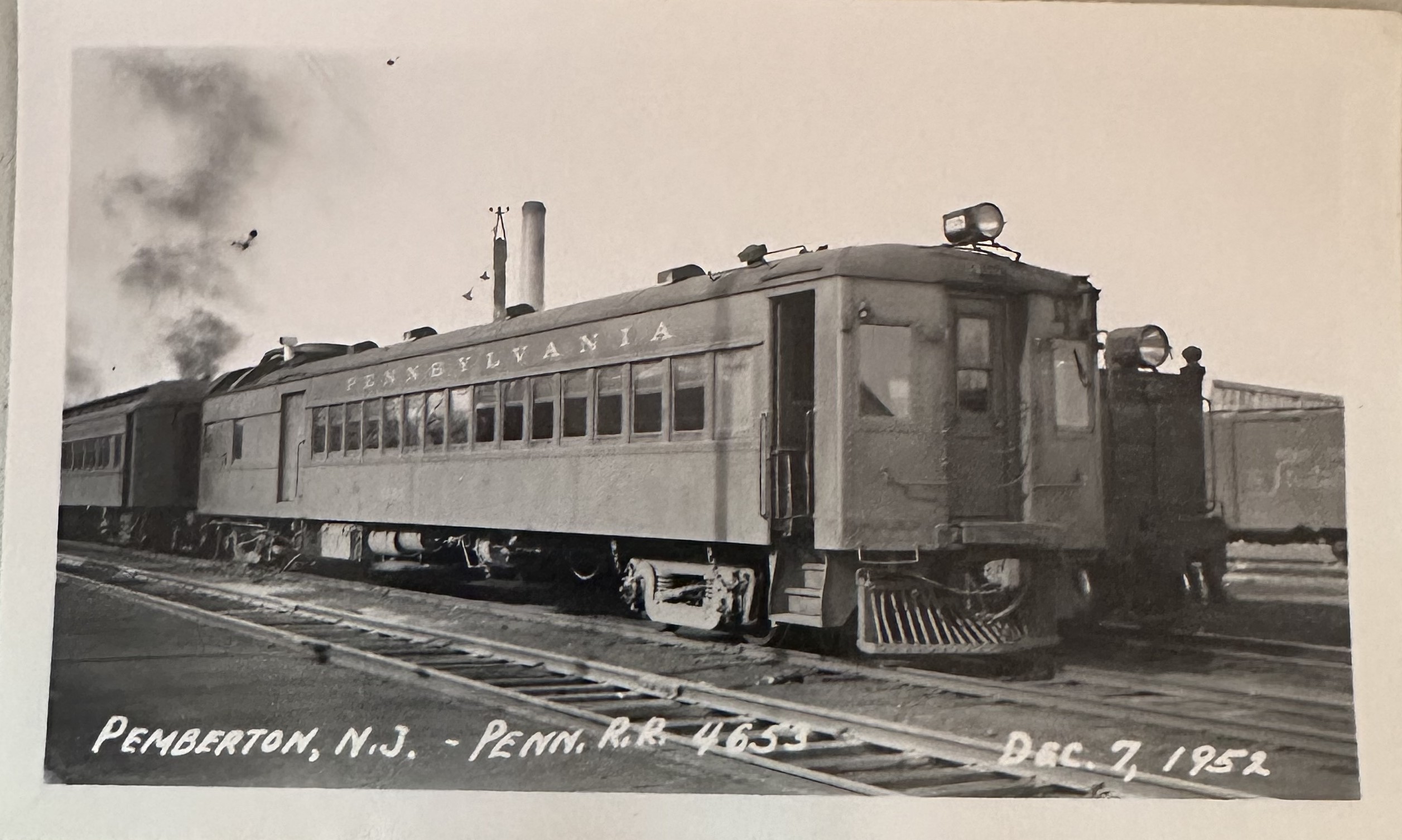
The Pennsylvania Railroad years brought modernization, new equipment, and increasingly heavy use. During World War II, Pemberton played a direct role in troop movements, including the dramatic February 7, 1943 movement when 298 coaches transported 18,534 men from Fort Dix in a single day, an extraordinary logistical achievement that underscored the line’s wartime importance. PRR steam locomotives such as the Class E6s Atlantic #460 (the “Lindbergh Engine”) and Class K4s Pacific #3750 all saw service through Pemberton, several of which survive in museums today and are listed in the pamphlet’s equipment register.
By the mid-20th century, however, automobile travel, trucking, and highway expansion began to erode the P&H’s utility. Passenger service between Camden and Pemberton ended in 1957, marked by the last run of PRR engine #5351, an event memorialized in Frank C. Kozempel’s article. Freight followed a similar decline, and the line saw piecemeal abandonment as industries relocated and rural shipping needs diminished. By the early 1980s, rail operations west of Pemberton were reduced to isolated freight movements, and on June 1, 1984, track from Pemberton to Fort Dix was formally removed.
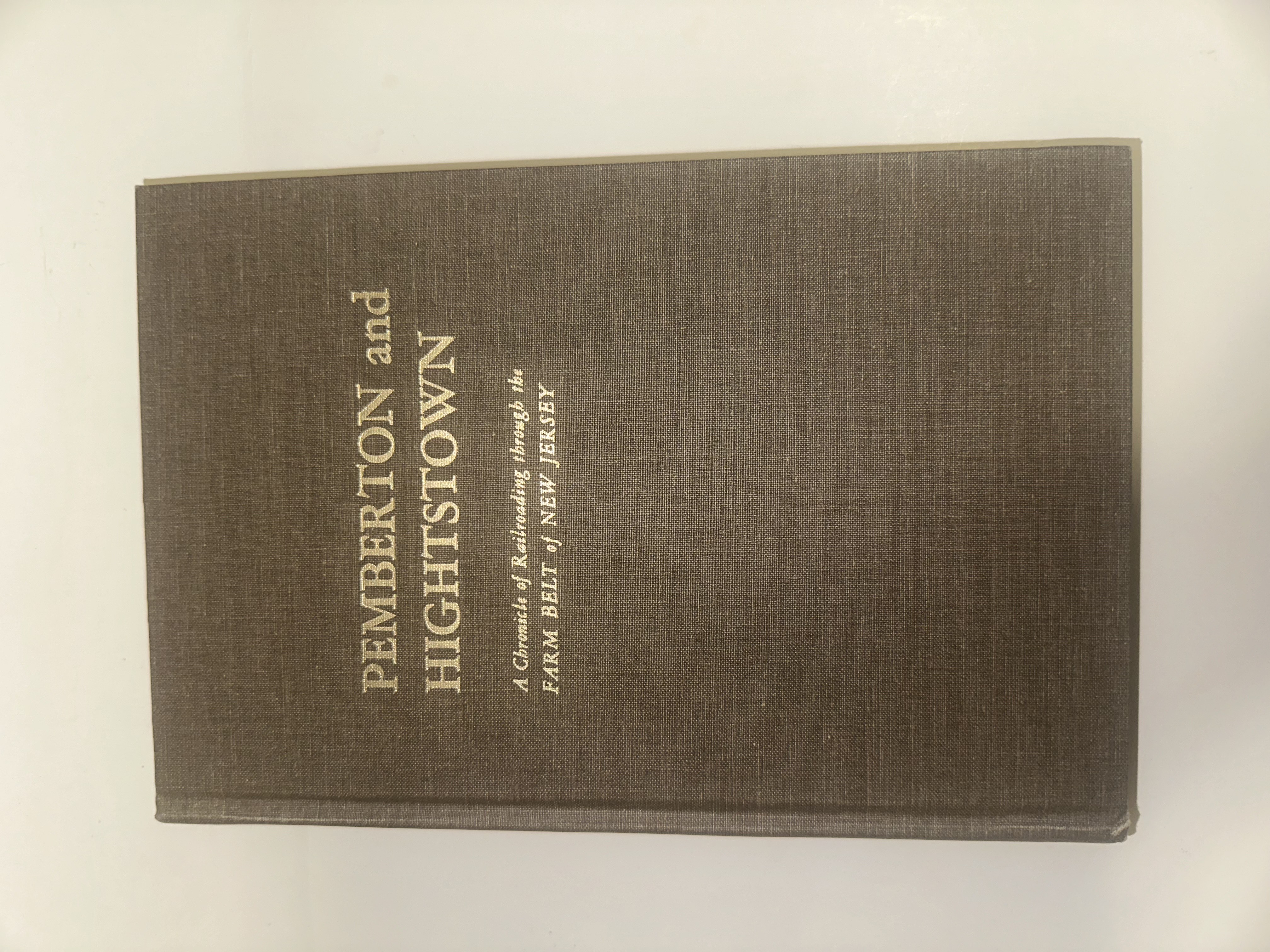
Today, only fragments of the Pemberton & Hightstown Railroad’s right-of-way remain, but its influence is unmistakable. The line shaped settlement patterns, sustained agricultural economies, supported military mobilization, and connected rural Pine Barrens communities to the wider world for more than a century. Its story, preserved in documents like this pamphlet, in surviving locomotives, and in local memory, offers an essential window into how railroads transformed central New Jersey from the 1860s through the modern era.
Want to learn more about our project? Click here.